


Cicle integral de l’aigua
Integrated Potable Water Production and Storage System – Monte Trigo
Republic of Cabo Verde
About the project
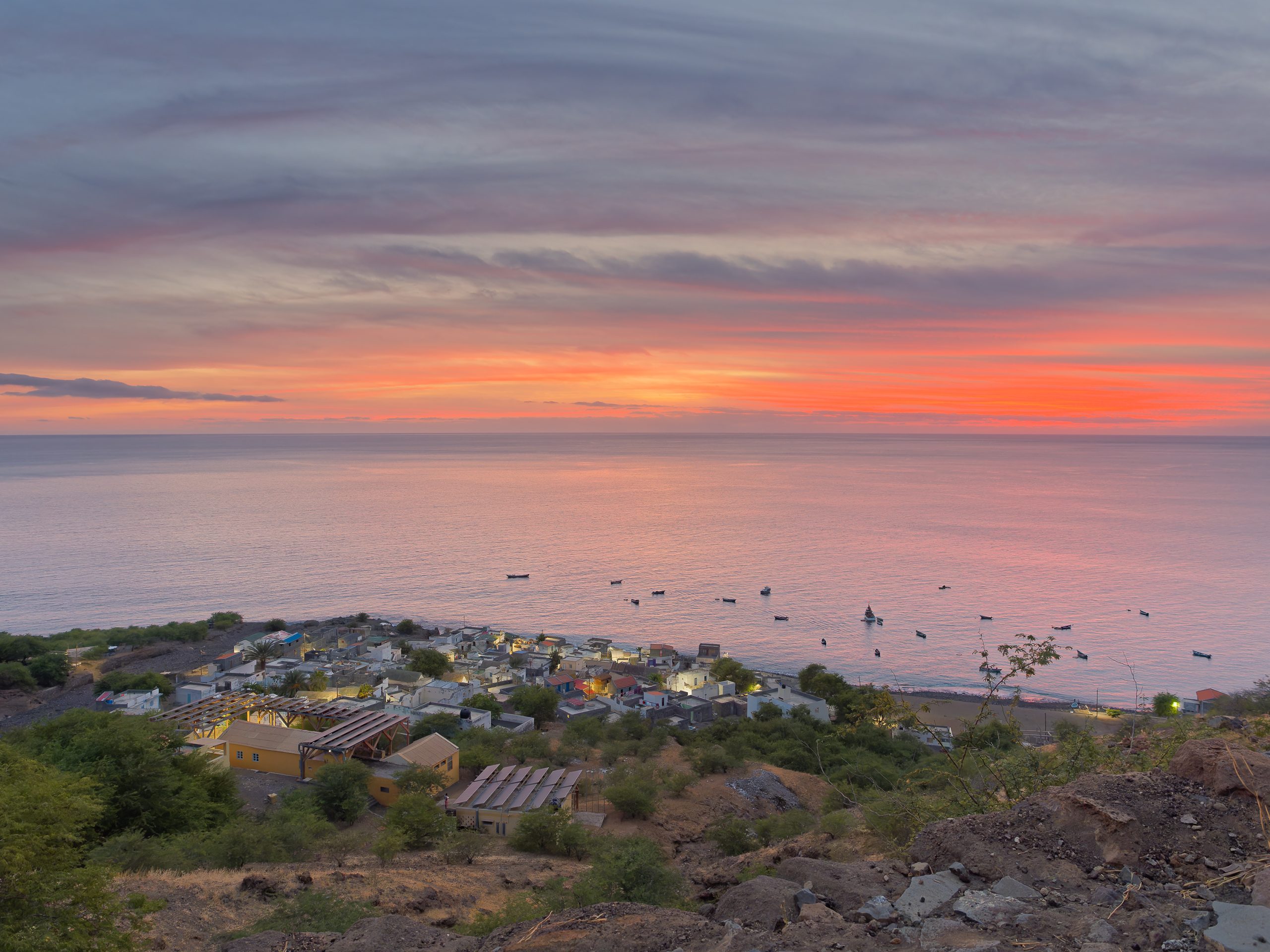
The potable water system developed for the village of Monte Trigo constitutes a key solution to ensure a safe, continuous, and sustainable water supply in one of the most isolated communities of Santo Antão, Cabo Verde. This integrated project, executed by Lente Ingenieros, replaces a vulnerable traditional supply system — based on an unstable spring and a deteriorated storage reservoir — with a modern infrastructure that combines intake through a cantara-type well, desalination by reverse osmosis, and fully autonomous operation powered by photovoltaic energy.
Monte Trigo, accessible only by sea or footpath, faced severe limitations in both water quality and availability. The implementation of this new system guarantees high-quality potable water for the resident population, their fishing-related economic activities, and a growing tourist flow. In doing so, the project directly contributes to social well-being, water resilience, and the sustainable development of the community.
Technical Solution Developed by Lente Ingenieros
Lente Ingenieros designed an integrated potable water production and storage system based on reverse osmosis desalination powered by photovoltaic energy, fully adapted for isolated (off-grid) operation.
The project prioritizes robustness, low maintenance requirements, energy efficiency, and the ability to operate reliably over long periods, even under difficult access conditions.
1. Intake via Cantara-Type Well
Water intake is achieved through a well excavated in local masonry, with a 1 m internal diameter and 5.8 m depth, allowing natural seawater entry through the filter walls. A submersible pump with a capacity of 2.98 m³/h conveys water to the plant via a 120 m-long PEAD DN63 pipeline.
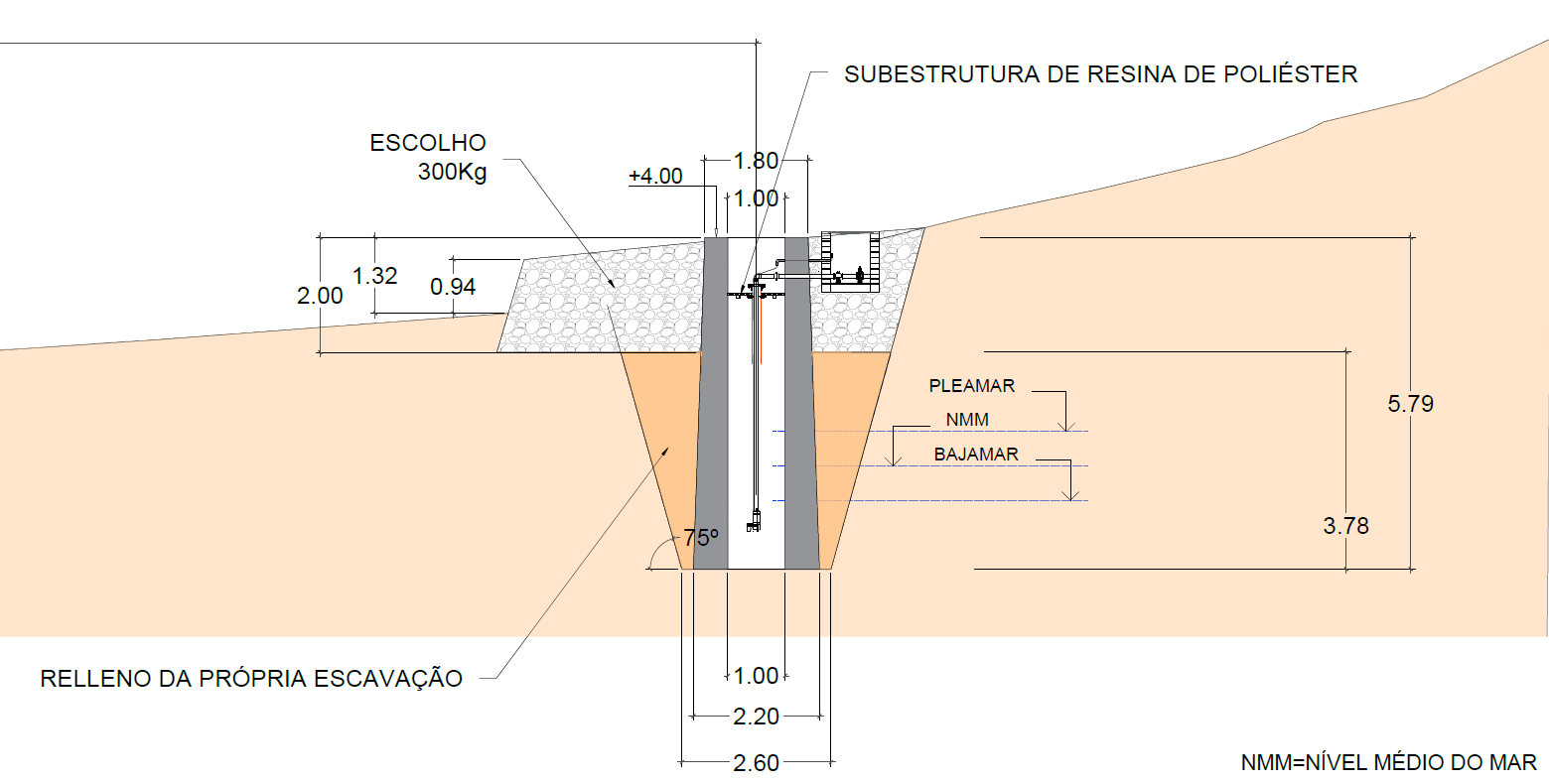
Section detail of the intake well – Integrated Potable Water Production and Storage System – Monte Trigo
2. Compact Desalination Plant
The core of the system is a desalination plant housed in an 8×6×3.95 m building, where all treatment stages are integrated.
Pre-treatment
Includes a 25 µm pre-filter, a silica–anthracite filter, and a 5 µm cartridge filter. This setup reduces SDI, protects the membranes, and ensures that the feedwater quality remains within the parameters required by the manufacturers.
Reverse Osmosis
The plant uses eight SW30HRLE‑4040 membranes, distributed across four pressure vessels, with a conversion rate of 35% and a production capacity of 25 m³/day. Salt rejection exceeds 99.6%, yielding high-quality product water (<500 µS/cm). A 5.19 kW high-pressure pump provides the necessary conditions to overcome the osmotic pressure of seawater.
Post-treatment and Stabilization
The desalinated water undergoes pH adjustment using sulfuric acid and passes through a calcite filter for remineralization and chemical stability (target pH 8.2; LSI ±0.15). Finally, an automatic chlorination system ensures continuous disinfection.
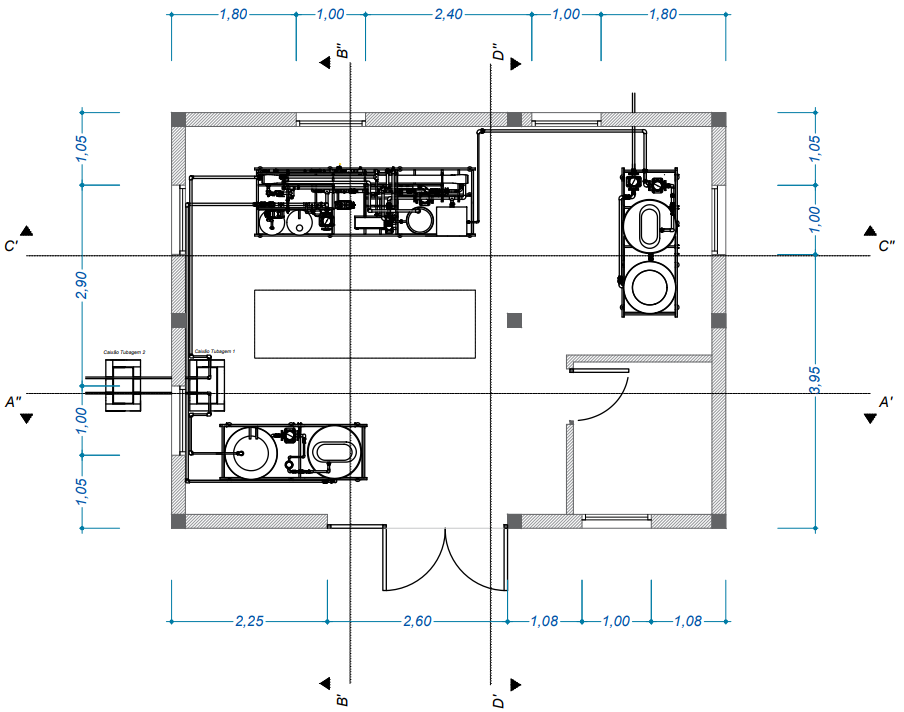
Desalination plant structure developed by Lente Ingenieros for the Integrated Potable Water Production and Storage System – Monte Trigo (Santo Antão, Cabo Verde)
3. Conveyance and Storage
A 321 m PEAD DN63 pipeline transports potable water from the plant to the distribution reservoirs. The system reuses two existing reservoirs, one of which was fully rehabilitated (cracks, corrosion, waterproofing) using SIKA technologies.
The combined capacity ensures autonomy exceeding 3 days even under maximum demand conditions—a critical factor given the community’s isolated location.
4. Electrical and Control System
The system operates entirely on photovoltaic energy with lithium batteries in off-grid mode, with energy consumption optimized through variable frequency drives on major equipment. The installation includes a PLC, touch HMI panel, and instrumentation network (flow, pressure, conductivity, pH, level, free chlorine), enabling fully automatic, stable, and protected operation.
Community Benefits
The new system has enabled a significant qualitative improvement in the population’s daily life:
-
Safe, continuous, and sustainable access to potable water
-
Greater resilience against failures and interruptions
-
Improved public health and well-being
-
Direct support for fishing and tourism activities
-
Drastic reduction in maintenance needs and technical vulnerability
The solution combines advanced engineering with a practical, robust, and site-adapted approach, demonstrating how a well-designed intervention can sustainably transform the life of an isolated community.
Features
RO Conversion
35 %
Salt Rejection
>99,6 %
Served Demand
300 people + tourism + ice factory
Final Water Quality
<500 µS/cm, pH 7–8, pathogen-free
Storage Autonomy
>3 days
Total Budget
202.154,38 €
Features
 Design flow
 25 m³/day
 Power
Power 11,1 kW
Location


